Most dropshipping courses teach you how to copy Chinese product images, run a few Facebook ads, and hope for the best. That is not what this guide is.
This is the complete system behind over $800 million in e-commerce sales — broken down step by step for beginners and intermediate sellers alike.
By the end of this guide you will know how to find a winning product, build a brand that actually converts, shoot your own content, set up your Shopify store correctly, run profitable Facebook and Google ads, write emails that bring customers back, and track your daily profit like a real business owner.
No shortcuts. No stolen content. Just the real framework.
WHY DROPSHIPPING FAILS — AND WHAT TO DO INSTEAD
Before getting into the system, you need to understand why most dropshipping businesses fail within months.
The traditional dropshipping model goes like this. You find a cheap product on AliExpress, list it on your Shopify store, run some Facebook ads, and when someone buys, you order it from the Chinese supplier and they ship it directly to the customer.
It sounds simple. And it can work in the very short term. But here is what happens next.
Because you are selling low quality products with supplier images, Facebook and Shopify will flag your account. Payment processors like PayPal and Shopify Payments will ban you. Your ad account gets shut down. And even if none of that happens, a dozen other people are selling the exact same product with the exact same images and the exact same price. So your margins collapse.
The real solution is not dropshipping as a delivery model. The real solution is building a brand on top of the dropshipping model. You keep all the benefits, which means no inventory and no upfront stock costs, but you compete differently. You compete with better branding, better photography, better copy, and a better customer experience.
That is what this entire guide covers.
PART 1: HOW TO FIND A WINNING PRODUCT
The 10 Criteria Every Winning Product Must Meet
Not every product can become a profitable dropshipping brand. Here is exactly what to look for.
1. It must solve a big, painful problem
Products that succeed are products that solve problems people desperately want fixed. Back pain. Foot pain. Poor sleep. Bad posture. These are big burning desires. Compare that to, say, a portable cooler that keeps beers slightly colder. The problem is too small, and customers will not feel urgency to buy.
The more painful the problem, the easier it is to create demand quickly.
2. It must work on Facebook ads or go viral organically
There are two main ways to acquire customers in dropshipping. Facebook ads and organic viral content on TikTok or Instagram. The ideal product works on at least one of these. Facebook rewards products with a clear problem and solution. Organic content rewards products with a visual element, something that creates a pattern interruption when people are scrolling.
A yellow cleaning scrub went viral simply because people scrolled past it and thought, why is that cleaning product yellow? That curiosity made them stop and watch.
3. It must have a visual element
For a product to go viral organically, it needs something visually interesting or satisfying. Something that shows a before and after. Something that creates a surprising outcome. Something people have never seen before. If it is invisible, it is very difficult to make viral content.
4. It must have a gross margin over 60 percent
If you are selling a product for $100 and the cost to get it to the customer is $40, your gross margin is 60 percent. This leaves you room to spend on advertising and still make profit. Anything below 60 percent becomes very difficult to make work at scale on paid ads.
5. It should have an average order value over $100
Selling a $20 product means your profit per order might be $5 or $6. That means your cost to acquire a customer must be under that. It is almost impossible to make Facebook ads work profitably at that price point. Aim for $100 minimum, and ideally higher.
6. It must not be saturated in your target market
A saturated product is one where sophisticated, well-funded competitors are already running lots of ads. If a product is in Walmart, Kmart, or has 50 versions on the front page of Amazon, you are too late for that specific market.
However, saturation is relative. A product that is saturated in the United States might be completely untapped in Finland, Sweden, or Norway. Many successful dropshippers find winning products by entering smaller English-speaking or European markets where no one else has bothered to go yet.
7. It should be differentiable
You do not always need to change the physical product. Positioning is a form of differentiation. If everyone sells a knee brace to marathon runners, sell it to office workers with desk jobs. If everyone sells compression wear to gym athletes, sell it to men in their 40s who want to look slimmer under a work shirt. Same product, completely different audience, completely different ad.
8. It must be small enough to ship economically from China
Large or heavy products have prohibitively expensive international shipping costs. A portable kayak that costs $40 to make might cost $80 to ship. The math simply does not work. Stick to products that are compact and light enough to ship from China for under $15.
9. It must be compliant and safe
Avoid anything electrical without proper certifications, anything for babies or children without regulatory approval, and anything that could be considered a counterfeit or licensed product. Selling unlicensed Pokemon products or Disney merchandise will get your Shopify account permanently banned.
10. The product must actually work
This sounds obvious, but many dropshippers sell products that simply do not deliver on their promise. A product that works creates word of mouth referrals. It creates good reviews. It creates repeat purchases. A product that does not work creates chargebacks, bans, and stress. Only sell something you would be proud to give to a family member.
PART 2: HOW TO RESEARCH AND FIND WINNING PRODUCTS
The Free Method — Conscious Scrolling
Create a brand new Instagram or TikTok account specifically for product research. Interact with sponsored posts, click on ads, visit websites, and like product content. Do not interact with anything you cannot dropship. This signals to the algorithm that you are an active shopper, and it will start serving you more e-commerce ads.
Save every interesting product you find to a master list. You are not looking for one product. You are looking for ten.
The Paid Method — Trend Rocket
Trend Rocket is a product research tool that shows you brands that are currently scaling on Facebook ads, along with all their ad creative, revenue estimates, and competitor data.
Here is how to use it effectively.
Go to the Discover Brands section and apply two filters. First, set Instagram followers and Facebook likes to under 10,000. This identifies brands that are relatively new and have not spent heavily yet. Second, set the Facebook ad count to over 10. This confirms they are actually running ads.
This combination shows you brands that have found something that is starting to work but are still early enough that you can enter the market.
Open 20 to 30 brands at a time by holding Command or Control and clicking each one. Visit each website. Look at what they are selling, how they are positioning it, and what their main ad creative looks like. Save the most interesting products to a board inside Trend Rocket so you can review them later.
How to Evaluate a Product You Found
Once you have a shortlist of products you like, do the following.
Search the product on Google while using a VPN set to your target country. Check how many sophisticated competitors are already running Google Shopping ads. If Amazon and big retailers dominate the results, the product may be too saturated.
Go to AliExpress and search for the product. If it has been on AliExpress for years with hundreds of sellers and thousands of reviews, it is probably too late for the standard dropshipping audience.
Go to the Facebook Ads Library and search the product category. Count how many different brands are running ads. Fewer competitors is almost always better when you are starting out.
The ideal situation is a product with one or two small competitors who have a poor website, basic photography, and unsophisticated ads. That is a market you can enter and dominate.
PART 3: FINDING YOUR SUPPLIER WITH ZEN DROP
Once you have selected a product, you need a supplier that will store it, pack it, and ship it directly to your customers without you touching any inventory.
The tool to use for this is Zen Drop. Here is why it stands out from other dropshipping tools.
Zen Drop has over 300 staff in China managing the operations. Unlike other tools that simply connect you to suppliers and let them figure it out, Zen Drop actually holds stock in their own warehouses and manages the fulfilment process centrally. This results in significantly faster shipping times and far fewer problems.
Zen Drop also handles refunds quickly, sometimes within a few minutes, which is critical for maintaining good standing with Shopify Payments and PayPal.
Their Select program is particularly valuable. Once you reach around 10 orders within a defined period, you get a dedicated WhatsApp manager who handles your specific account personally. They can check on orders, monitor quality at the factory level, and solve problems before customers even notice them.
To get started, sign up to Zen Drop, connect it to your Shopify store, and search for your product in their catalogue. If you cannot find it, use the AliExpress Chrome extension to import any product from AliExpress directly into Zen Drop, and they will source and ship it for you.
Once you find the product, order a sample to your own address. This is important. Do not spend thousands of dollars on photography and ads before you have held the product in your hands and verified that it is actually good.
PART 4: MARKET RESEARCH AND POSITIONING
This is the stage that separates brands from stores. Most dropshippers skip this entirely. That is why they fail.
Before you build your website or shoot your first piece of content, you need to understand three things.
Who is your customer? What are they already doing to solve this problem? And why are your competitors failing to serve them properly?
How to Do Competitor Research
Go to TikTok and search your product category. Watch every piece of content you can find. Pay attention to the hooks. How are creators opening the video? What problem are they calling out? What avatar are they speaking to? What is the emotional trigger that makes you keep watching?
Go to Google and search your product. Click through every competitor’s website. Note their price, their offer, their headlines, and what they are doing well versus what looks amateur.
Create a competitor breakdown document with at least three to five competitors. For each one, record their price, their core offer, who they seem to be targeting, what their ads look like, what they are doing well, and what you could do better.
How to Find Your Positioning
Once you have studied your competitors, look for the gaps. What audience is no one targeting? What angle is everyone using that you can deliberately avoid? What specific use case does the product have that no one is talking about?
Positioning is simply choosing one specific customer in one specific situation and speaking directly to them. That is what makes an ad feel like it was written for you personally.
To find these angles, go to Reddit and search problems related to your product. Read what real people say in their own words. These exact phrases become your copy, your hooks, and your ads.
PART 5: BUILDING YOUR BRAND
Your Brand Name — The DTF Framework
Your brand name needs to satisfy three things.
It must be domainable, meaning you can get the .com. It must be trademarkable, meaning it is not too descriptive or too generic. Something called Calming Blanket is too descriptive to trademark. And it must be flexible, meaning it does not trap you into one product forever. A name too closely tied to your first product will limit your ability to expand later.
Use ChatGPT to generate name ideas. Give it more than just the product. Tell it the feeling you want to create, the demographic you are targeting, and the values the brand stands for. Ask for abstract options, not just literal product names. Then check every option on Namecheap to confirm the .com is available, and run a quick trademark search to make sure no one already owns it.
Your Brand Identity
Work through the following questions for your brand. You do not need them perfectly answered on day one, but you need a direction.
What is the purpose of the brand? What problem exists in the world that makes this brand necessary?
What is the vision? Where does the brand go in five years?
Who is the customer? Be specific. Not just adults aged 25 to 55. Which specific person, in which specific situation, with which specific frustration?
What makes this brand different? Not just a better product, but a different perspective, a different value, a different way of speaking to the customer.
What is the tone of voice? Professional? Funny? Scientific? Down to earth?
Use a tool called Looka to generate logo options quickly. Select a few you like and purchase the files. Alternatively, use Canva to create a logo from templates. Just make sure whatever elements you use can eventually be trademarked as a unique combination.
Select your brand colors and fonts early and use them consistently everywhere. Your website, your email, your ads, and your packaging should all feel like they belong together.
PART 6: PRODUCT PHOTOGRAPHY AND CONTENT
Photography is one of the most underinvested parts of dropshipping, and one of the highest leverage improvements you can make.
Poor photography signals a scam. Great photography signals a real brand. One photo shoot increased conversion rate by 30 to 50 percent on a brand test.
The Levels of Photography
Level 0 — Never do this. Stealing competitor images or running their supplier videos. You will get DMCA takedowns, bans, and your business will not survive. Do not do it.
Level 1 — Supplier images. Using the images your supplier provides is acceptable if they created the images themselves. Always do a reverse image search on any supplier image before using it. Drag it into Google or TinEye and check if it belongs to another brand. If it does, do not use it.
Level 2 — Modified supplier images. Take the white background product shot from your supplier, remove the background in Canva, and place it on a lifestyle background. Add arrows and feature callouts. This is fast, cheap, and significantly better than basic supplier images.
Level 3 — AI model photography. For clothing products, use AI tools like Krea to place your product on a realistic AI-generated model. This is getting better every month and is now good enough for initial testing.
Level 4 — Your own photo shoot. This is the gold standard. Hire a photographer, hire a model, and shoot your product in context. Plan the shoot in advance with a detailed shot list covering every angle, every feature close-up, every lifestyle scenario, and every prop you need.
Planning Your Photo Shoot
Before the shoot, build a shot list that includes product images on white background from every angle, close-ups of key features or materials, lifestyle images showing the product in use by your target customer, and comparison shots that visually communicate what makes your product better.
Pull inspiration from Pinterest, Behance, and competitor websites. Screenshot images that represent the tone and quality you want and send them to your photographer as reference.
Also plan to capture short iPhone video clips during the shoot. You do not need a professional videographer. Just a phone and natural movement. These become your Facebook ad creatives.
PART 7: USER GENERATED CONTENT AND VIDEO ADS
User generated content, or UGC, is video content that looks like a real customer or influencer talking about your product. It looks native in the social media feed. It does not feel like an ad. That is exactly why it works.
How to Find UGC Creators
Search UGC creator on TikTok or Instagram and go to the people tab. You will find creators who have listed themselves as available for brand collaborations. Look through their portfolios and filter for people who have good lighting, good audio, emotional delivery, and creative variety in their content.
Reach out via email or DM. Personalize the message. Tell them why you chose them specifically. Attach a brief that tells them exactly what you need.
How to Write a Creator Brief
Your brief should include the following.
Deliverables — three hook variations, each between 30 and 60 seconds, plus some lifestyle iPhone photos and all raw footage.
Core content messaging — what is the problem being solved, who is the customer, and what are the two or three main benefits of the product?
Hook ideas — give them two or three starting points based on your Reddit research. For example, did you know that most socks actually make blisters worse? or I switched from merino to alpaca and here is what happened.
Do’s and don’ts — no licensed music, no other brand logos visible, good lighting, no background noise, no scripted robotic delivery.
Call to action — specific offer like buy one get one free at your website URL.
Usage rights — in perpetuity for all platforms.
How to Edit UGC for Facebook Ads
Use CapCut on desktop or your phone. Import the raw footage, cut out all dead air and pauses, add auto-generated captions in two to three words per frame for mobile viewers with sound off, add a text title in the first second to identify the avatar such as for builders, and export in both 4 by 5 ratio for the Facebook feed and 9 by 16 ratio for Stories and Reels.
Keep ads under 60 seconds. Pace is everything. No pause should last more than half a second.
PART 8: SETTING UP YOUR SHOPIFY STORE
Before You Build Anything
Set up your domain first using Namecheap. Get the .com at minimum. If you plan to sell in the UK, also get the .co.uk. Connect it to Shopify by updating the DNS settings in Namecheap to point to Shopify’s servers.
Set up a professional email address using Google Workspace. Use your brand name, not Gmail. This protects your deliverability for email marketing and makes you look legitimate to customers, suppliers, and ad platforms.
Set up Shopify Payments using your legal name exactly as it appears on your ID. Use your actual address. Use a card that belongs to you and has funds available. Any mismatch can cause your account to be flagged or banned.
Choosing Your Theme
The Shrine theme is widely used by successful dropshippers because it converts well, supports bundles and upsells natively, and has excellent drag-and-drop editing. If you are on a very tight budget, the default Dawn theme will work for initial testing. Upgrade to Shrine once you start seeing sales.
Building Your Product Page
Your product page above the fold, meaning what people see before they scroll, is the most important piece of your store. It determines whether they stay or leave.
You need a clear headline that names the product and its main benefit, a strong offer visible immediately such as buy one get one free, your best product images showing the product from multiple angles, a clear add to cart button, and pricing with either a strike-through comparison price or a percentage saving.
Below the fold, add your feature icons with brief descriptions, a fabric or material explanation if relevant, a comparison table that shows your product against alternatives or competing materials, an FAQ section that answers the three to five most common objections, your returns policy and shipping time prominently displayed, and reviews and social proof.
Setting Up Your Offer
The strongest offers for dropshipping are buy one get one free, percentage discounts tied to bundle sizes such as buy two save 15 percent or buy four save 25 percent, and free shipping above a threshold that incentivizes customers to spend more.
Set up your BOGO offer by duplicating your product listing, changing the price to double your single unit price, and setting up an automatic discount in Shopify that applies 100 percent off the second unit at checkout.
Essential Apps
Install two apps immediately. Vitals gives you visitor recordings so you can watch exactly how real customers use your site and spot problems you never would have noticed. After Sell adds a post-purchase upsell offer that appears immediately after checkout, giving customers the option to add another unit or bundle at a discount without having to enter their payment details again. This can increase your average order value significantly with almost no extra marketing cost.
PART 9: LEGAL AND BUSINESS SETUP
This section is not the most exciting, but it is what separates people who build a real business from people who run an operation that could collapse overnight.
Set up a company. Running a dropshipping business as a sole trader or under your personal name means that if something goes wrong and a customer gets hurt, you are personally liable. They can sue you personally and potentially come after your personal assets. Setting up a company, known as an LLC in the US, an Ltd in the UK, or a Pty Ltd in Australia, creates a legal separation between you and the business.
Get product liability insurance. If a customer is injured by a product you sold, insurance covers you. Without it, one lawsuit could end your business and your personal finances.
Track every single expense. Use a spreadsheet, then eventually accounting software like Xero or MYOB. Every subscription, every supplier payment, every creator fee, every software tool needs to be logged and have an invoice attached. When tax time comes, you will need all of this.
Understand sales tax thresholds. In most countries, you are required to register for sales tax or GST once your revenue exceeds a certain threshold. In Australia that is $75,000 per year. In the UK and US the rules vary. Use ChatGPT to research the thresholds for the countries you are selling in, then set up the appropriate settings in Shopify.
Trademark your brand name. Once you are making consistent profit, trademark your brand name and logo in the regions you operate in. This protects you from suppliers who might copy your brand, competitors who might steal your assets, and platforms removing your content without the legal backing to fight back.
Set up two-factor authentication on everything. Facebook, Shopify, PayPal, email, and every other platform. Getting hacked is the fastest way to lose everything you have built. Make this non-negotiable.
PART 10: FACEBOOK ADS — THE COMPLETE SYSTEM
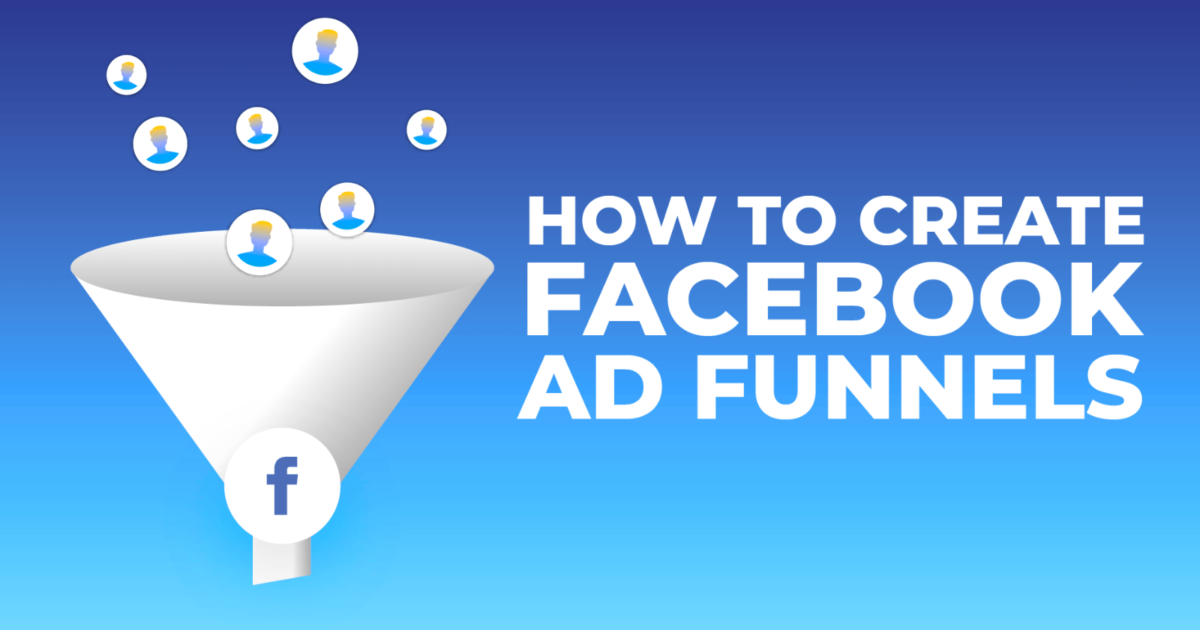
Facebook is the most powerful marketing channel ever built for e-commerce. Used correctly, you can put a dollar in and track exactly what you get back. Used incorrectly, you will spend thousands and wonder why nothing is working.
Setting Up Your Business Manager
Go to business.facebook.com and set up a Business Portfolio using an established personal Facebook account. The older the account and the more friends and activity on it, the more trusted you will be.
Verify your business with your ABN, company number, or EIN depending on your country. Upload identification. Use your legal name exactly as it appears on your ID. Add your phone number. Make sure everything matches.
Set up two-factor authentication for all users immediately.
Creating Your Facebook Page
Under Pages in Business Manager, create a new Facebook page for your brand. Add your logo as the profile photo. Add a lifestyle image as the cover. Add your website. Write a short description. Create at least one post so the page does not look empty.
Setting Up Your Pixel
In Business Manager, go to Data Sources and create a new Dataset. Connect it to Shopify using the native Shopify-Facebook integration. This should be done through the Shopify app store by searching for Google and YouTube and then following the setup prompts for Facebook.
Verify the pixel is firing correctly by installing the Facebook Pixel Helper Chrome extension and visiting your own website. You should see the pixel trigger on page view, product view, add to cart, initiate checkout, and purchase.
Campaign Structure
Use a Sales objective campaign. Turn on Advantage Campaign Budget at the campaign level and set your daily budget there, not at the ad set level. This allows Facebook to allocate budget to the best-performing ad sets automatically.
Start with one ad set labeled Broad. Leave all targeting wide open. Do not add interest or demographic targeting other than setting a minimum age of 25 for B2B or health products. Let Facebook find your buyers.
Inside that one ad set, upload four to six different creative variations, including a mix of video ads and image ads targeting different avatars and angles. Facebook will test them and allocate more budget to whatever performs best.
How to Read Your Ad Account
Set up a custom column view in Ads Manager that includes, in order, amount spent, purchase conversion value, return on ad spend, total purchases, cost per purchase, cost per initiated checkout, cost per add to cart, outbound clicks, cost per outbound click, outbound click through rate, CPM, and impressions.
This gives you a funnel view of where customers are dropping off. If your CPM is very high, the algorithm does not like your audience or creative. If your click through rate is under 1 percent, your hook is not working. If people are clicking but not adding to cart, your landing page is the problem. If people are adding to cart but not purchasing, your offer or checkout is the problem.
Each of these is a separate fixable issue.
Your Target Return on Ad Spend
Calculate your break even ROAS using this formula.
Take your selling price and subtract your cost of goods including shipping. That gives you your gross profit per order. Divide your selling price by your cost to acquire a customer to get your ROAS. If your product sells for $100 and costs $40 to deliver, your gross profit is $60. If you want 20 percent net profit, you need to spend no more than $40 on ads per order. That means your target ROAS is 100 divided by 40, which equals 2.5.
Anything above your break even ROAS is profitable. Anything below it means you are losing money.
Scaling Your Ads
When your ads are profitable, increase your daily budget by 10 to 20 percent every two to three days. Do not double or triple your budget overnight. Large sudden budget changes send the algorithm into a new learning phase and can destroy performance.
When performance drops, turn off ads that are performing below your break even ROAS and create new creative variations. Always be testing new hooks, new angles, and new avatars. This is the ongoing work of running Facebook ads.
PART 11: ADVANCED ADS — ADVERTORIALS AND VIDEO SALES LETTERS
Once your basic Facebook ads are working and you want to scale into a more competitive space, advertorials and video sales letters are the tools that take brands from $100,000 a month to $1 million a month.
What Is an Advertorial?
An advertorial is a long-form article that looks like an unbiased news story but is written to sell a product. It is designed to educate the reader, break down their objections, tell a compelling story, and then introduce your product as the solution.
Every advertorial must display the word ADVERTORIAL at the top. This is a legal requirement. Pretending to be an actual news article is deceptive and illegal.
Advertorials work best for products that solve a significant health or pain problem where the customer needs education to understand why your solution is better than what they have tried before. They tend to work better with audiences over 40 who are more willing to read longer content.
The structure of a great advertorial follows this pattern. A strong headline that creates curiosity and does not mention the product directly. A qualifying statement that tells the right reader this article is for them. A first-person story or expert story that builds trust. A detailed explanation of why existing solutions do not work. An introduction of a new solution mechanism without naming your product. Introduction of your product as the embodiment of that solution. Social proof in the form of customer reviews or expert endorsements. A call to action with urgency and a clear offer.
What Is a Video Sales Letter?
A video sales letter, or VSL, is the video equivalent of an advertorial. These are longer form videos, often five to twenty minutes, that take the viewer on an educational journey and end with a strong offer.
Great VSLs use the same structural arc as advertorials but leverage the power of storytelling, props, demonstrations, and visual metaphors to keep viewers engaged for long periods. The best VSLs feel like watching a documentary or a TED Talk, not an advertisement.
PART 12: GOOGLE ADS
Google captures demand that already exists. People who are already searching for your product type are warm buyers. Facebook creates demand for people who have never heard of your product. Both have a place in a scaling dropshipping brand.
For beginners, start with a Performance Max campaign. This campaign type runs across all Google placements, including Google Shopping, YouTube, the Display Network, and Gmail, and lets Google decide where to allocate budget based on what converts.
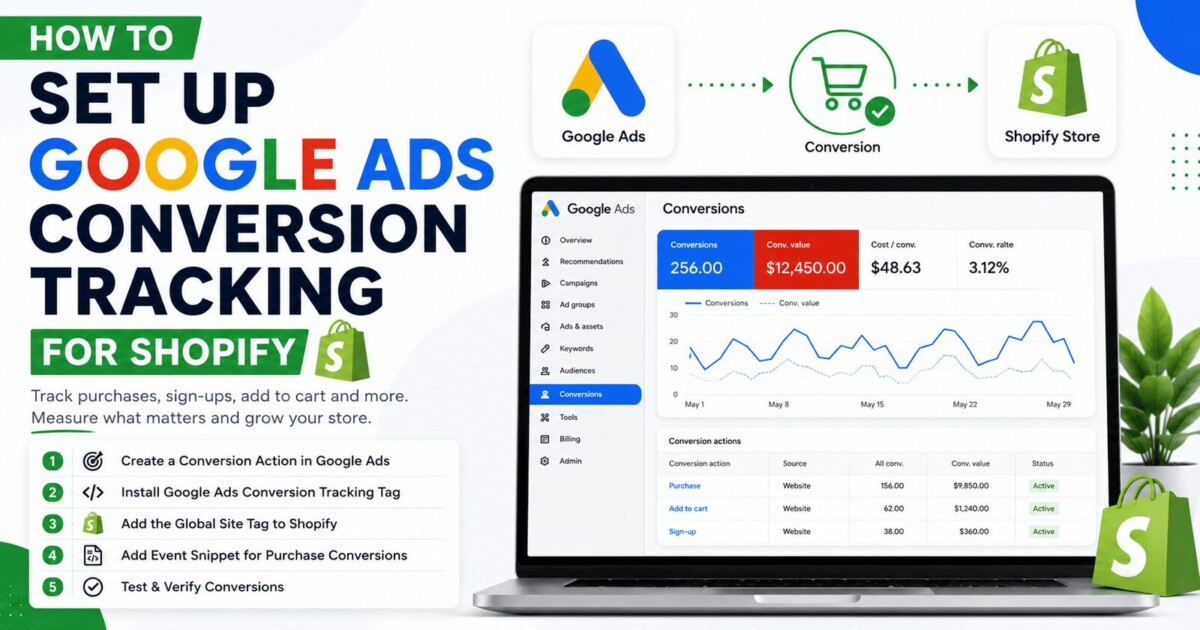
Before launching any Google ads, set up your Google Merchant Center and connect it to Shopify via the Google and YouTube app. Make sure all your products are approved in the Merchant Center before spending money on ads.
Create two Performance Max campaigns. One that excludes your brand name, called the non-branded campaign. And one that includes your brand name, called the branded campaign. The non-branded campaign targets people searching for your product category. The branded campaign captures people who already know your brand name, often after seeing your Facebook ads, and are now searching for you on Google.
Set a lower budget for the branded campaign and a higher target ROAS, because these customers are warmer and should convert at a higher rate.
PART 13: EMAIL MARKETING
Email is the highest return on investment marketing channel available to e-commerce businesses. Once someone is on your list, you own that relationship. No algorithm can take it away.
The tool recommended here is Omnisend. It is more affordable than Klaviyo, has strong automation features, includes SMS, and integrates natively with Shopify.
The Pop-Up
Set up a pop-up that offers 10 percent off in exchange for an email address. Use a multi-step format where the visitor first clicks Yes, I want 10 percent off before being asked for their email. This creates a micro-commitment that increases sign-up rates significantly.
Set the pop-up to appear after seven seconds on page. Do not pre-check any SMS or marketing consent boxes. Always get explicit consent.
Remove the Omnisend branding from your pop-up by upgrading to a paid plan. A pop-up with Powered by Omnisend looks amateur and reduces trust.
Welcome Series
The welcome series is the sequence of emails sent to new subscribers who have not yet purchased. The goal is to educate, build trust, and convert.
Email one sends immediately and introduces your brand, explains the product, and includes the discount code.
Email two sends 24 hours later and focuses on the main problem your product solves, using language pulled from Reddit research.
Email three sends 48 hours later and includes social proof, reviews, or customer photos.
Email four sends on day four and creates urgency by reminding them the discount code expires soon.
Abandoned Cart and Abandoned Checkout
Set up two separate automation flows. One for customers who added to cart but did not reach checkout. One for customers who started checkout but did not complete the purchase.
Each flow should have at least two to three emails. The first email sends within an hour and shows the product they left behind. The second email sends 24 hours later and addresses objections or adds a new offer. The third email sends 48 hours later and creates final urgency.
Also add one SMS message to the abandoned checkout flow, because at that stage you have their phone number. Keep it short, personal, and direct.
PART 14: TRACKING DAILY PROFIT
This is the one thing that most dropshippers never do, and it is the reason many of them go out of business without realizing it.
The daily profit formula is simple. Net profit equals revenue minus marketing spend minus cost of goods minus all other expenses.
To make this work, you need to set up the cost per item in Shopify for every product. Go to the product, click bulk edit, add the cost per item column, and enter the true landed cost of getting that product to the customer including the product cost and the average shipping cost. This allows Shopify’s reports to automatically calculate your gross profit per day.
Use a tracking spreadsheet that you update every morning with four numbers. Revenue for the prior day, ad spend for the prior day, cost of goods for the prior day, and any other expenses.
If the daily net profit percentage is above your target, consider increasing your ad spend. If it is below break even, reduce ad spend immediately. This one discipline will save you from the most common mistake in dropshipping, which is spending more and more on ads while the business quietly loses money.
Alternatively, use Triple Whale, which connects to Shopify and your ad platforms and calculates your daily profit automatically.
PART 15: WHAT TO DO WHEN YOUR ADS ARE NOT WORKING
Every dropshipping business has periods where things do not work. Here is a structured way to diagnose the problem rather than panicking and giving up.
Step 1 — Check that your store can actually be purchased. Open your website in an incognito window, add the product to cart, and attempt to check out from the country you are advertising in. You would be shocked how many people run ads to a store where checkout does not actually work.
Step 2 — Analyse your advertising. Look at your click through rate, your cost per click, and your cost per add to cart. If your click through rate is under 1 percent, the creative is not working. If clicks are good but add to carts are low, the landing page or offer is the problem.
Step 3 — Get feedback. Send your website and ads to people who will be honest with you. Post in relevant communities. Ask if they would buy this. Ask what feels confusing or unconvincing.
Step 4 — Change one variable at a time. Test a new hook. Test a new avatar. Test a new offer. Test a new landing page angle. Do not change everything at once or you will not know what made the difference.
Step 5 — Consider the product. If you have done everything above and nothing is working after real spend, the product might genuinely not have enough demand or the market might be too saturated. Going back to the product research phase is not failure. It is the system working as intended.
THE DROPSHIPPING FLYWHEEL — HOW THIS ALL FITS TOGETHER
Here is the complete system as one loop.
You find a product that solves a real problem with good margins and limited competition. You build a brand around it with a clear name, positioning, and visual identity. You get samples, shoot your own photos and videos, and create compelling ad creative. You build a Shopify store that looks professional, handles objections, and has a strong offer. You launch Facebook ads with multiple creative angles, track your daily profit, and iterate based on data. You set up email marketing to capture and convert warm traffic. You use the profits to create better content, test new angles, and eventually expand to Google Ads and new products under the same brand.
The first loop takes the longest. Every loop after that gets faster because you understand your customer, you have content infrastructure, and you have cash flow to invest.
FINAL THOUGHT
The reason most people fail at dropshipping is not that the model does not work. It is that they treat it like a lottery ticket instead of a business.
They copy product images, run $50 of ads, get no sales, and quit.
Real dropshipping success comes from treating every step as a craft. Product research takes days, not hours. Your creative needs to be tested, not guessed. Your website needs to be built to convert, not just look pretty.
If you treat this like the serious business it is, commit to learning every week, test methodically, and never stop iterating, success is not a matter of if. It is a matter of when.
Disclaimer
Results mentioned in this guide including revenue figures are individual case study examples. They are not guarantees of income. Business outcomes vary based on your product, market, execution, budget, and a range of external factors. Always consult a qualified accountant or lawyer before making business and financial decisions.